Montessori-Inspired Learning: What It Really Means for Your Child
Montessori-inspired learning is an approach to early education where children build understanding through exploration, hands-on learning, and activities matched to their own pace and interests rather than through instruction alone. Walk into a classroom built this way and you won’t find rows of desks facing a teacher. You’ll find a child choosing their own work, returning to a material they haven’t mastered yet, or quietly showing a younger classmate how something is done. It looks unstructured. It isn’t.
At ELC, a Montessori school in Mangalore, Montessori-inspired learning isn’t a teaching technique we layer on top of a curriculum. It’s the foundation everything else is built from.
What Is Child-Led Learning?
At the heart of Montessori-inspired learning is child-led learning: instead of every child following the same lesson at the same pace, teachers prepare a range of activities and let children choose according to their own interests and readiness.
This isn’t the absence of guidance it’s a different kind of guidance. The teacher’s job shifts from delivering information to observing closely: noticing what a child is drawn to, when they’re ready for something new, and when to simply let them work uninterrupted. A child who chooses their own work, and is trusted to stay with it, engages far more deeply than one who is told what to do next. This principle sits at the core of how the American Montessori Society describes the method internationally, not just as an ELC practice.
Why Independence Matters So Early
Independent learning gives children confidence and responsibility long before they can articulate either word. Simple, everyday tasks pouring their own water, putting away materials, dressing themselves, completing a small job start to finish build a quiet kind of self-reliance that compounds over time.
Teachers step in when needed, but the goal is always to give children just enough freedom to try things on their own first. Struggling briefly with a zipper or a spill isn’t a problem to prevent it’s part of how independence is built.
Hands-On Learning: Understanding Through the Hands
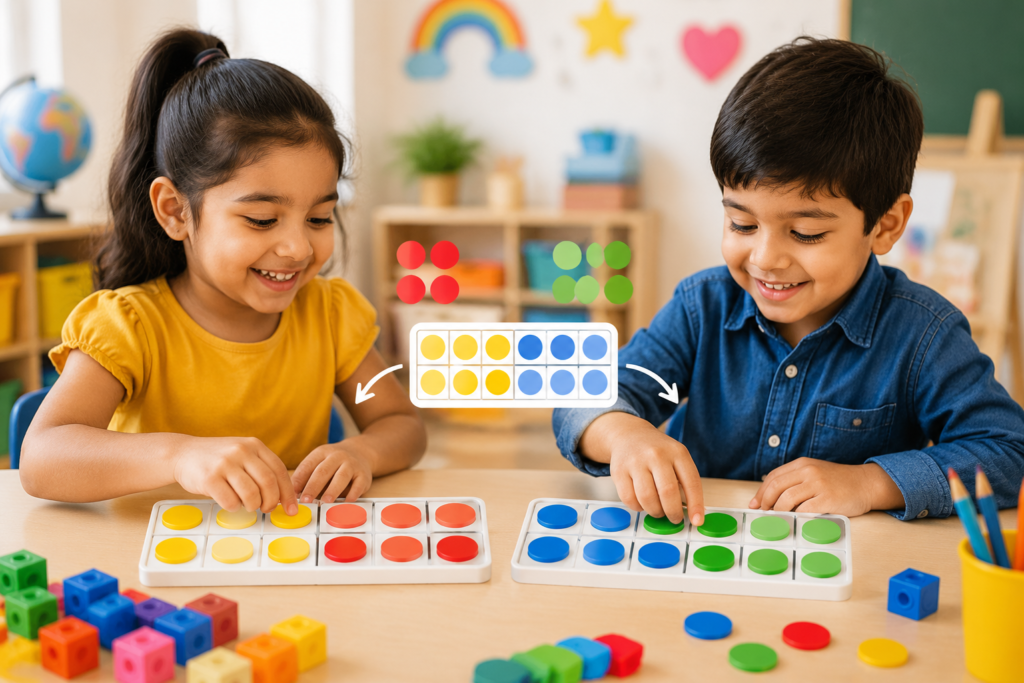
Young children understand the world through their hands before they understand it through words. Hands-on learning sorting, building, matching, counting, drawing gives abstract concepts something physical to attach to.A child who spends fifteen minutes sorting objects by size isn’t just playing; they’re practising classification, sequencing, and fine motor control at the same time. This kind of hands-on learning builds concentration and problem-solving skills in a way that worksheets alone rarely achieve.
Supporting the Whole Child, Not Just Academics
A strong early learning environment develops more than academic knowledge. It supports communication, physical coordination, social skills, creativity, and emotional growth side by side because a five-year-old doesn’t experience these as separate subjects, and shouldn’t have to.
Rather than measuring progress through test scores alone, Montessori-inspired classrooms look at the whole picture: how a child concentrates, collaborates, communicates, and copes when something doesn’t go their way.
Learning Through Exploration
Exploration lets children discover concepts on their own terms. Teachers introduce the right materials at the right moment and then step back, allowing children to observe, experiment, and work toward their own conclusions rather than being handed the answer.
This is slower than direct instruction. It’s also stickier a concept a child works out for themselves tends to stay with them longer than one they were simply told.
The Role of Self-Directed Learning
Self-directed learning asks children to choose their own activities and work through them at their own pace, with the teacher observing and guiding rather than directing. Over time, this builds concentration, decision-making, and a genuine sense of ownership over their own learning skills that matter well beyond the early years.
Practical Life Skills for Children
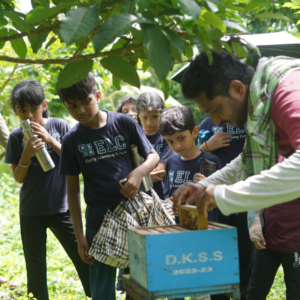
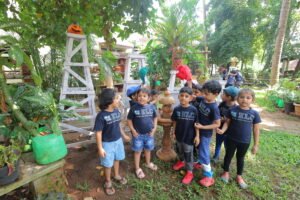
Education in the early years isn’t confined to formal lessons. Practical life skills for children tidying up after an activity, organising materials, watering a plant, helping with a classroom task teach patience, coordination, and responsibility in a way no worksheet can.
These small, repeated responsibilities are often where independence takes root most visibly, and they’re a core part of how practical life skills for children are built day to day, not taught in a single lesson. Even simple, repeated chores count as practical life skills for children when they’re given real ownership over the task.
Where Play-Based Learning Fits In
Montessori-inspired learning and play-based learning aren’t separate philosophies competing for space in the same classroom they’re deeply connected. Games, puzzles, storytelling, and imaginative play give children real opportunities to build skills while genuinely enjoying the process, rather than experiencing early education as pressure.
The goal is never to entertain for its own sake. It’s to create meaningful, engaging experiences that happen to also be how young children learn best.
Encouraging Creativity and Curiosity
Creative expression through art, music, movement, building, and storytelling gives children a way to communicate ideas they don’t yet have the vocabulary for. These activities build imagination and self-expression, and often reveal a side of a child’s thinking that’s harder to see in more structured tasks.
Conclusion
Montessori-inspired education creates a supportive environment where children can explore, make choices, build independence, and learn through real experience recognising that every child has their own pace and style of learning.
For parents evaluating early learning options, this approach is worth understanding closely: it shapes not just what a child learns, but how they come to feel about learning itself.
Curious what Montessori-inspired learning looks like day to day? Explore ELC’s approach as a Montessori school in Mangalore, or read about the role of play-based learning in early childhood development.