
About Our Approach
Four foundations. One child at the centre. Together they shape how we prepare the environment, ask questions, reason about the world, and step outdoors — so every child at ELC learns in a way that trusts them.
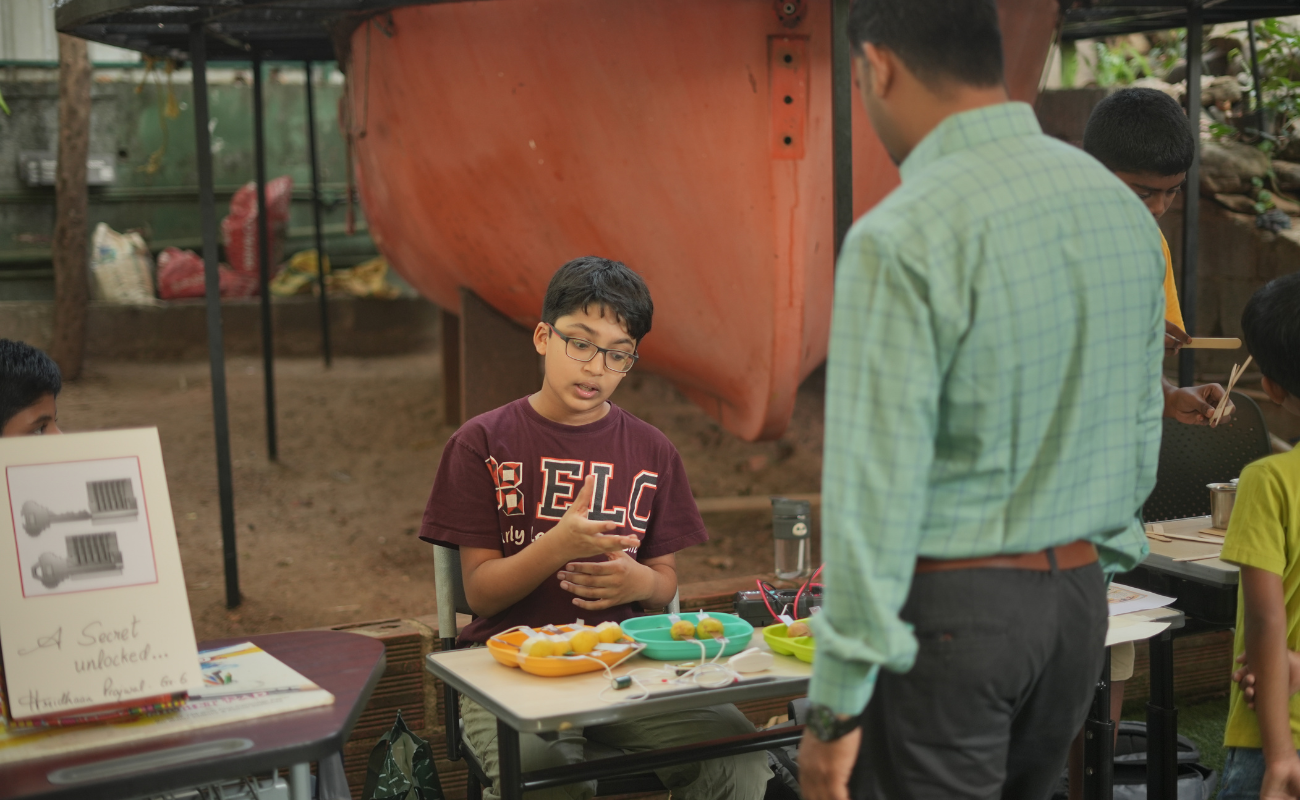
These four foundations merge into an approach that makes learning a personal experience for every child. They uphold our four pillars academic excellence, love for learning, persistence and well-being and help each child find their own path to character, empathy, skill and grit.
The Montessori Approach
At ELC, Montessori is more than a method—it is a deeply considered approach to childhood. Every environment is prepared with intention, every material has a developmental purpose, and every adult observes with insight and sensitivity—knowing when to guide, when to step forward and when to step back.
The Prepared Environment
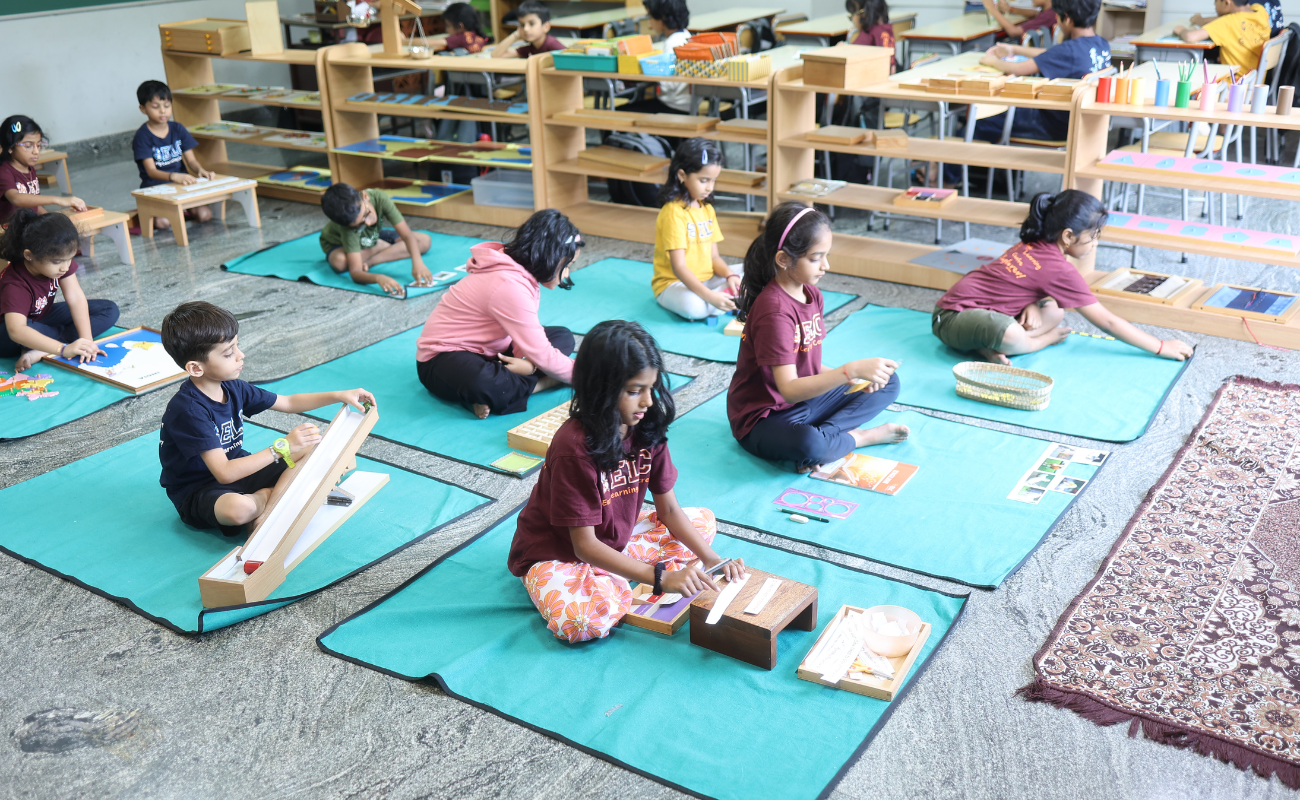
Learning unfolds within a specially prepared environment designed to support the child's natural development. It offers freedom of movement, purposeful activity and the space for each child to work at their own pace. Carefully designed Montessori materials invite exploration, repetition and discovery, helping children develop independence, concentration and confidence.
Freedom Within Limits
Children are given meaningful freedom—to choose their work, move within the environment and follow their interests—within clear and consistent boundaries. This balance nurtures self-discipline, responsibility and respect for others.
Learning Through Purposeful Activity
Children learn by doing. Through hands-on, purposeful activities, they explore concepts, make discoveries and construct their own understanding. Concrete experiences gradually lead towards abstract thought, making learning both meaningful and deeply rooted.
The Role of the Adult
The Montessori adult is a careful observer and thoughtful guide. Rather than directing every step, the adult prepares the environment, presents materials at the right moment and knows when to intervene—and when to step back—giving the child space to develop independence and confidence.
The Freedom to Work at One's Own Pace
Every child follows an individual developmental journey. Montessori respects differences in pace, readiness and interest, allowing children the time to repeat, practise and master skills without comparison or unnecessary pressure
Mixed-Age Communities
Children of different ages learn and grow together, creating a natural community of collaboration. Younger children learn through observation, while older children strengthen their understanding, confidence and sense of responsibility by helping others.
Learning Through Discovery
Montessori encourages children to explore, question and discover rather than simply receive information. Materials are designed to offer feedback, allowing children to recognise and correct errors independently and develop perseverance, problem-solving skills and confidence.
Education of the Whole Child
Montessori nurtures the intellectual, physical, social and emotional development of the child as an interconnected whole. The aim extends beyond academic achievement—to cultivate capable, independent and thoughtful individuals with a lifelong love of learning.
The essence of independence is to be able to do something for one’s self.
— Maria Montessori
What this looks like in a classroom? An ELC parent reflects.
“My four-year-old went from not knowing a word of English or numbers to forming four-digit numbers within four months and reading simple sentences. More than me, she became the biggest proponent of the school.”
Krishnamurti
Jiddu Krishnamurti was one of the twentieth century’s most searching thinkers on education, consciousness, and what it means to be human. He held that true education cannot be separated from self-knowledge.
At ELC, Krishnamurti’s influence is subtle and pervasive. It appears in the quality of silence we protect. In the questions teachers decline to answer on behalf of children. In the refusal to measure a child’s worth by academic results alone. Clarity, understanding, empathy and compassion are rooted into our everyday actions through weekly reflection sessions, open dialogue periods, and a broader culture of inquiry.
The highest function of education is to bring about an integrated individual who is capable of dealing with life as a whole.
— Jiddu Krishnamurti
From an ELC teacher
“As a teacher, I have been trained to present concepts in a scientific and structured way. Yet it was the children who showed me that even when something is scientific and logical, it is worth questioning. While presenting the parts of a plant, the first question they asked me was why we needed to uproot a healthy plant at all.”
Grounded in Science
We believe rational thinking and reasoning are our best tools for understanding the world. The beauty of science lies in its ability to question all things, including itself ideas proven through reason and rigorous logic, yet always open to falsifiability.
We encourage our students to approach their learning, their interactions and their lives with the same drive for reason and rationality. They are humble even in their excellence, patient in listening to others, and open to the kind of exchange of ideas that helps everyone in the conversation grow.
The level of public education in science and technology is an important sign of national scientific accomplishment.
— Carl Sagan
Mathematics and science as language in the classroom
While exploring fractions, a seven-year-old noticed that a circle divided into halves corresponds to a straight angle of 180°, and a quarter to a right angle connecting two concepts that had never been presented together. In the same class, another child noticed that fractions with even denominators often simplify into other even-numbered fractions, a pattern no one had pointed out to her.
Nature Perspectives
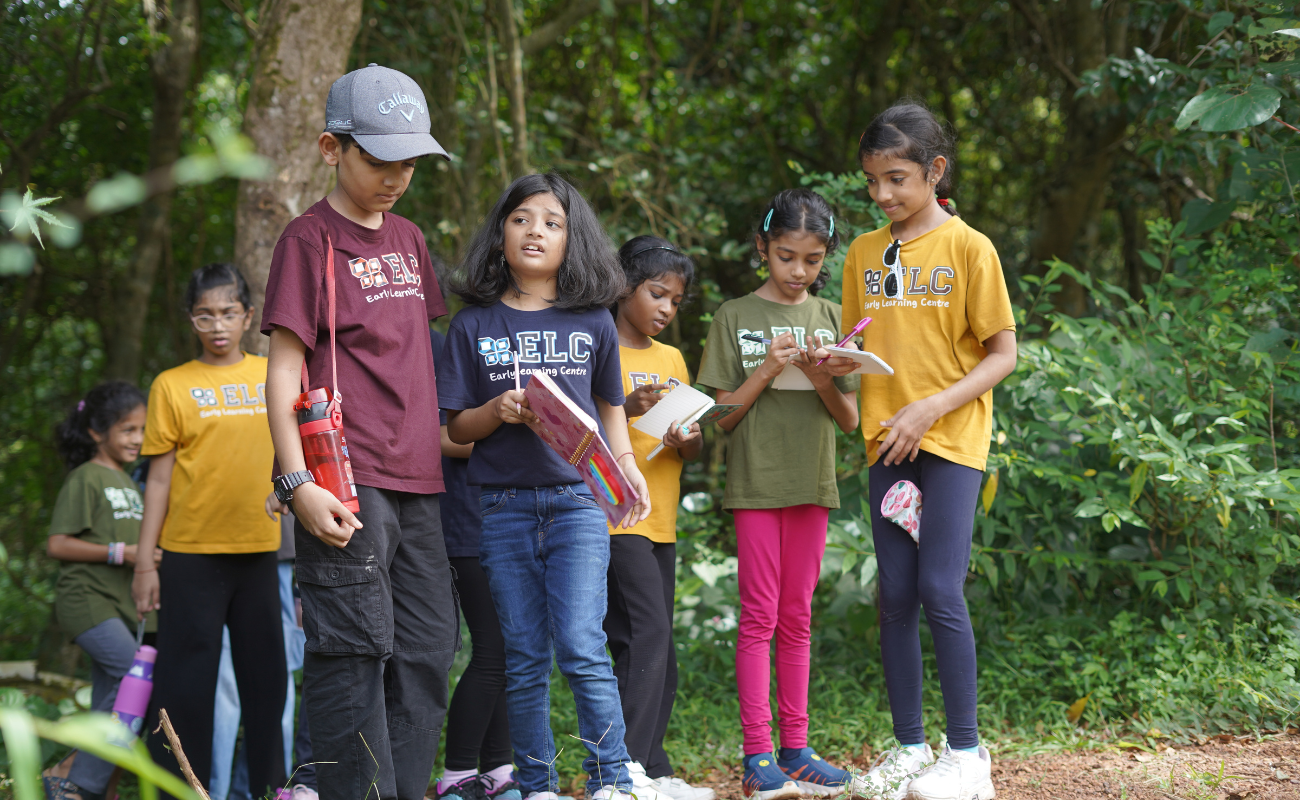
In an age of screens and abstraction in classrooms, we take our children back to nature. Nature Perspectives is our curriculum that puts the belief that nature is the best teacher into practice.
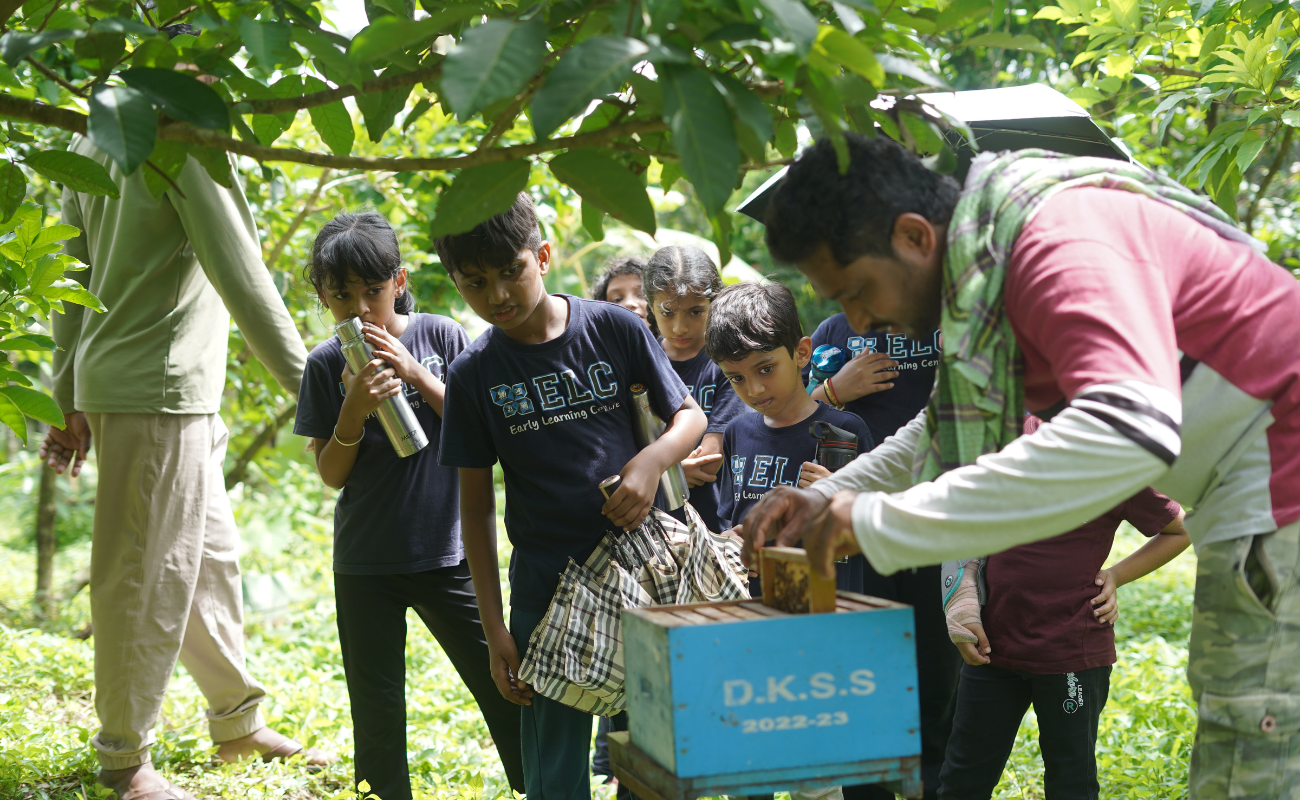
Mangalore’s lush urban biodiversity, and its proximity to the coast and a tropical evergreen forest, are all spaces for ELC’s outdoor curriculum. Our children have learnt geometry from leaves, questioned the aerodynamics of flying spiders, and explored the rhythm of tides finding questions, answers and perspectives about nature, themselves, and the ecological systems they are part of.
A child who can read a monsoon cloud, identify a coastal bird, and observe the care a spider shows to her young, has learned something no indoor classroom could offer.
On curiosity, from Samuel John
“People growing up in urban homes today, devoid of any natural space, find life forms like spiders and insects unfamiliar. With negative media and generational misunderstanding, we perpetuate a culture that replaces curiosity with fear. The best places to start are at home and in schools, where curiosity hasn’t yet been driven to fear.”
From an expert-led session with our primary grades
“When a 4th grader who is being introduced to spiders for the first time asks, ‘Do spiders communicate using vibrations on their silk?’ you know the school is nurturing learners and thinkers.”
Heritage and Cultural Awareness
In a storied coastal city like ours, people, culture and the structures they have created are phenomenal spaces to experience the world. Learning for our students sometimes begins with the colour of mud, or the geometry of an old building.
The Coastal Heritage Collective works with our students to understand the history of our city and how it was shaped — sometimes literally, working with mud and lime. True progress in thought comes from respecting the intelligence of traditional knowledge and practices.
Through this partnership, history, architecture and culture come alive through immersive experiences: our students have learnt to create maps, worked with natural building material, explored problem-solving in Tulu, and used art to express their unique perspectives on the city’s architectural history.
“Every now and then, I’m lucky enough to teach a kindergarten or first-grade class. Many of these children are natural-born scientists — although heavy on the wonder side, and light on skepticism. They’re curious, intellectually vigorous, provocative and insightful. I’m asked follow-up questions. They’ve never heard of the notion of a ‘dumb question’.”
— Carl Sagan