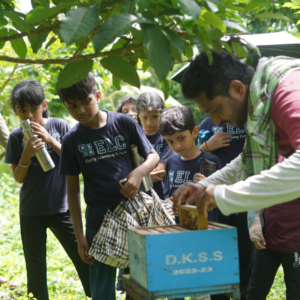
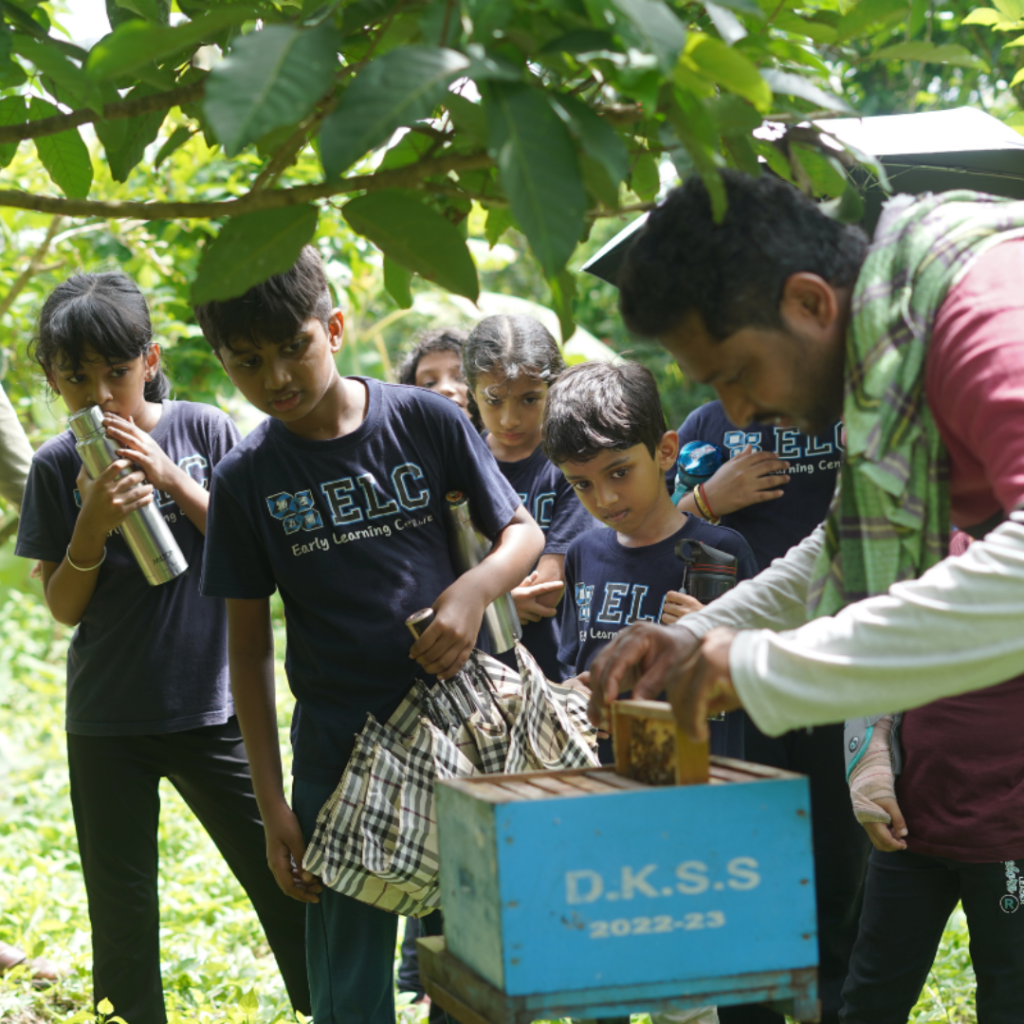
How nature-based learning supports children becomes clear the moment you take them outdoors away from a screen or at a desk, but in contact with real ecosystems, real curiosity, and real questions. At ELC, a school built around nature-based learning in Mangalore, this isn’t an occasional field trip. It’s a curriculum.
What Is Nature-Based Learning in Mangalore?
This approach uses the natural world plants, animals, weather, ecosystems as the primary material for a child’s education, rather than an occasional supplement to it. Instead of reading about a leaf’s structure, a child studies the leaf itself. Instead of memorising facts about tides, a child watches the tide actually move.The Case for Outdoor Learning
Mangalore’s lush urban biodiversity, and its proximity to the coast and a tropical evergreen forest, make outdoor learning a daily possibility rather than a special occasion. Nature and ecosystems are generous classrooms: children have learnt geometry from leaves, questioned the aerodynamics of flying spiders, and explored the rhythm of tides finding questions, answers, and perspectives about nature, themselves, and the ecological systems they’re part of. A child who can read a monsoon cloud, identify a coastal bird, and observe the care a spider shows to her young, has learned something no indoor classroom could offer.“People growing up in urban homes today, devoid of any natural space, find life forms like spiders and insects unfamiliar. With negative media and generational misunderstanding, we perpetuate a culture that replaces curiosity with fear.” — Samuel John
Nature-Based Learning and Experiential Learning, Together
This way of teaching and experiential learning reinforce each other: a child doesn’t just observe nature, they question it, test it, and draw their own conclusions. During an expert-led session, ELC’s primary grade students surprised the presenter with questions one might expect in an undergraduate classroom. Reflecting on the experience, the expert remarked:“When a 4th grader who is being introduced to spiders for the first time asks, ‘Do spiders communicate using vibrations on their silk?’ you know the school is nurturing learners and thinkers.”
Why It Matters for Development
Learning through nature isn’t just a change of scenery from the classroom — it changes how children think. Watching a spider build a web, timing the tide, or tracking a monsoon cloud all demand sustained attention in a way that a worksheet rarely does. Children build patience, observational skill, and comfort with uncertainty, since nature doesn’t behave on a lesson plan. Research on outdoor and experiential learning consistently points in the same direction: children who spend regular, structured time outdoors show gains in attention, emotional regulation, and problem-solving compared to children in exclusively indoor settings. The Children & Nature Network has documented this connection across dozens of studies — reinforcing something educators who work outdoors already notice day to day. At ELC, this shows up in small, specific moments: a child asking an unprompted question about spider silk, another noticing the exact moment a cloud shifts from white to grey before rain. These aren’t scripted outcomes. They’re what happens when children are given enough time and trust outdoors for curiosity to take over.Why This Matters: How Nature-Based Learning Supports Children
Across every example above the spider silk question, the tide-reading, the monsoon clouds the pattern is the same. Time outdoors gives children real problems to notice and solve on their own terms, rather than problems handed to them pre-packaged. That difference is small day to day, but it compounds: by the time a child reaches primary school, they’ve had years of practice trusting their own observations, not just recalling what they were told.