Your Child’s Learning Journey
From first steps to independent thinkers
At ELC, your child’s journey with us is not a race through milestones. It is a considered passage through thoughtfully-crafted environments designed to meet the child where they are — curious, capable, and ready to be trusted. We move with each child, at their pace, toward their full potential. We meet children where they are, at the things they are interested in, and work with them to take it a step forward one day at a time.
A considered passage.
Playgroup & Pre-KG
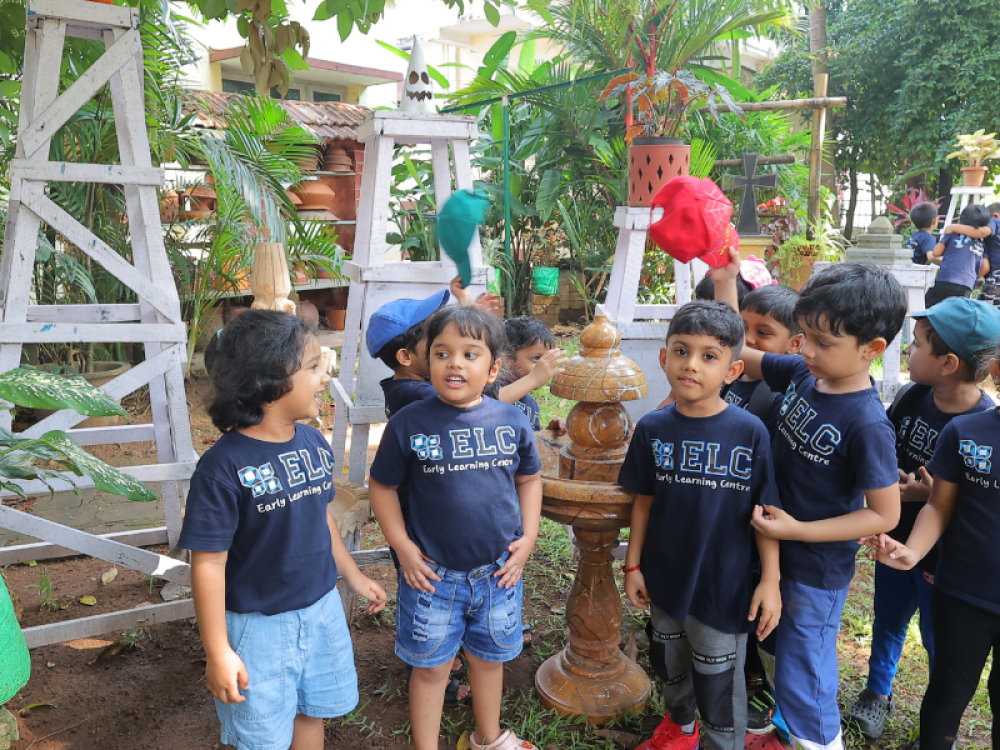
This is where your child’s relationship with the world begins. At ELC, your child will work with Montessori sensorial materials, develop language through real conversation, and be introduced to the natural environment as a source of inquiry. There is no hurry here. The classroom is prepared; the child decides what to explore. Our teachers support your child as they experience the world and sow the seeds of curiosity.
Reflections from a teacher at ELC
“Children seem genuinely happy and free. They are not afraid to ask questions and are calmly confident. The school invests a lot of time and resource on the right kind of environment for the children. Environments that encourage exploration and scientific thought.”
LKG & UKG
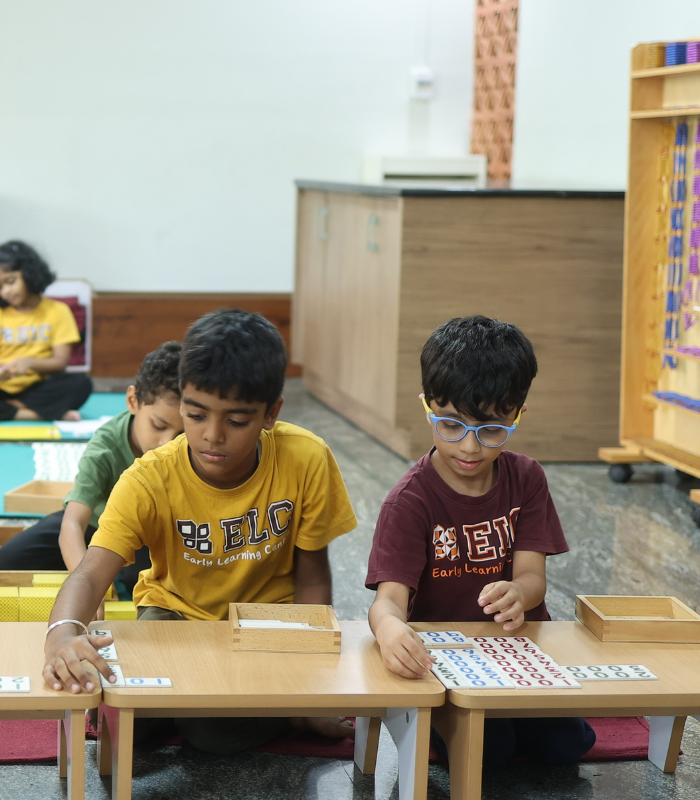
Language and number begin their formal journey through Montessori materials. Children read, count, and move using objects that make abstract concepts tangible and accessible. We work with each child to help them find their own paths to building strong foundational understanding. We move with them in their time and space. In addition to introducing these academic foundations, our children are introduced to experiences that help foster physical, emotional and social development. At this stage, our teachers help your children establish strong roots made of empathy and reason.
Reflections from a teacher at ELC
“One of our students needed to use concrete materials — beads, counters. She added numbers by physically counting and combining objects, repeating this many times until addition as ‘putting together’ became fully her own. Her classmate, however, understood the concept with a short demonstration and was ready to move on to word problems the same day. They each took their own path but reached the same goal.”
Primary (Grades 1–5)
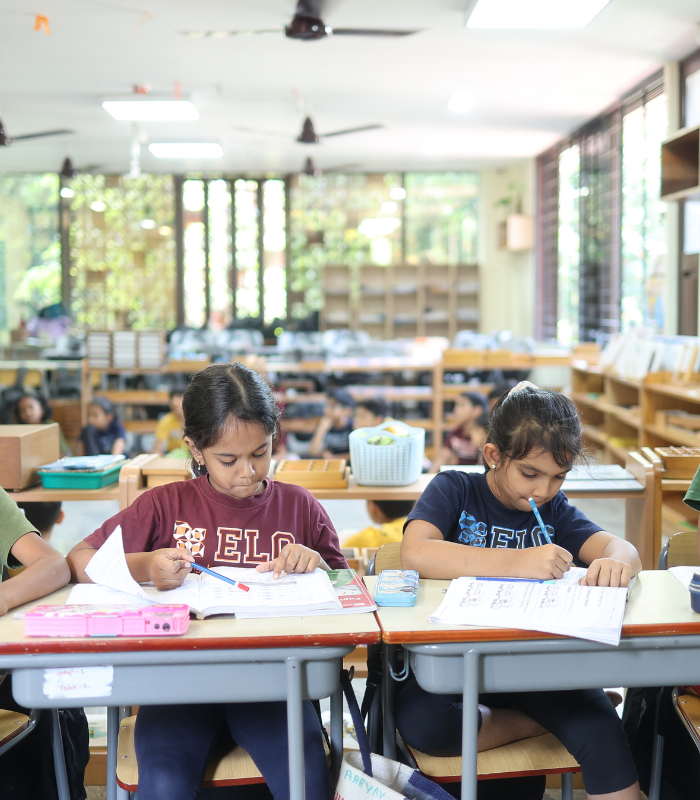
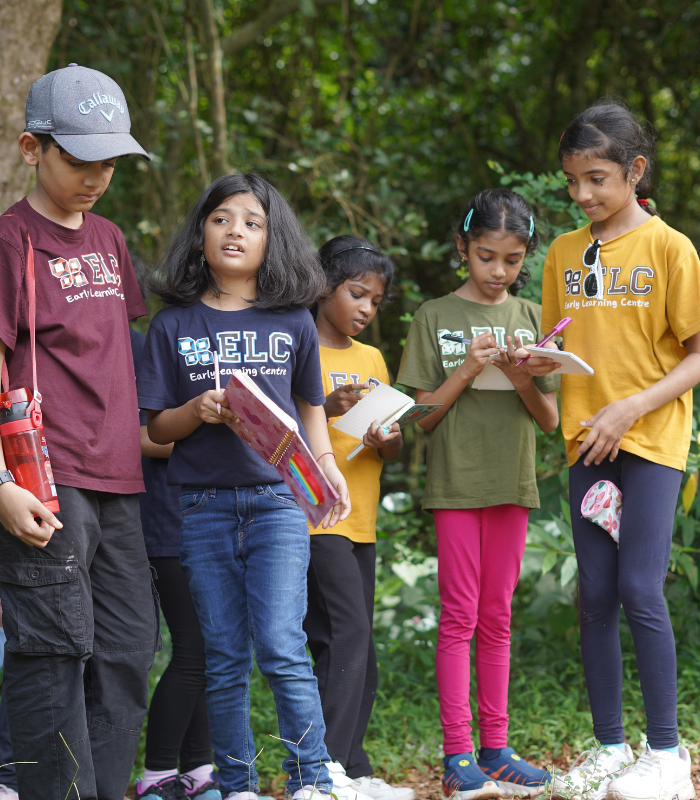
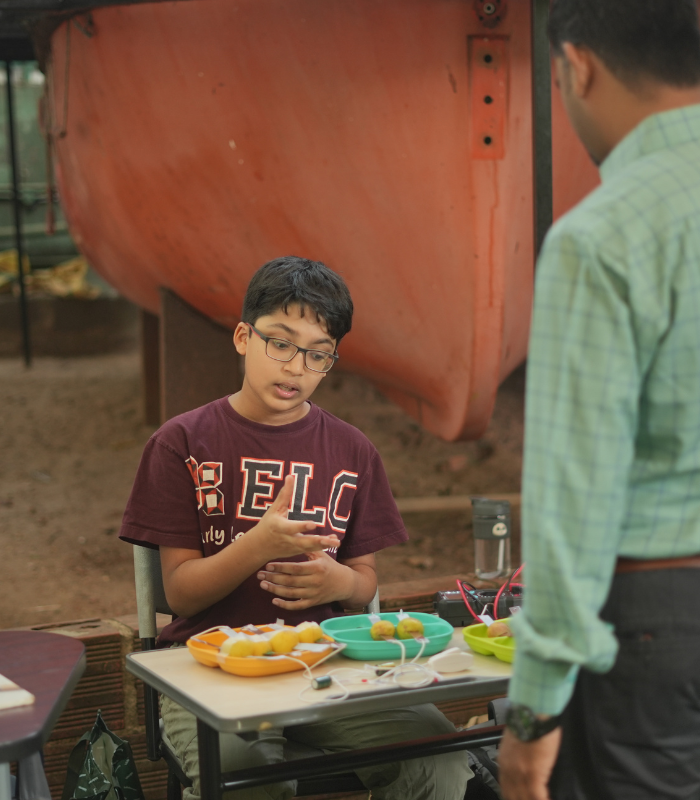
The children begin to understand the interdependence of knowledge. Science and math are not subjects separate from language or history. They are different ways to describe the world around them. The study of how things work informs how children read, write, and reason. Inquiry projects run alongside Cambridge requirements. Our homegrown Nature Perspectives presents children with a sense of belonging in the natural world. Being a part of the environment and not outside looking in, they begin to understand their place in a classroom, in society and in their ecosystems. These approaches come together to help your child form a strong foundation for STEM.
Reflections from a teacher at ELC
“A seven-year-old was introduced to parallel and perpendicular lines in geometry. On another day, while we were looking at types of leaf venation, one child looked up and said: ‘Oh — how is it that there is geometry in plants?’ That moment of connection did not need to be engineered. It arrived on its own, because the child had been given the materials and the time to notice.”
Middle School (Grades 6–8)
While we continue to support your child towards academic excellence, we help them look outward at society, at systems, at themselves in relation to others. Krishnamurti’s framework for self-inquiry becomes a living practice in the classroom. Cambridge Lower Secondary prepares students for the world ahead while ELC insists on the world within. Our gifted children program (Grades 5–6) bridges primary and middle school with opportunities for advanced learning where children can explore ideas to greater depths. They explore branches of science, math, philosophy and art to find themselves.
Reflections from a teacher at ELC
“A day in the life of an ELC student is purposeful. The school supports the child’s independence, curiosity, and overall development. During send-off, children wind up and learn responsibility and respect for the space.”
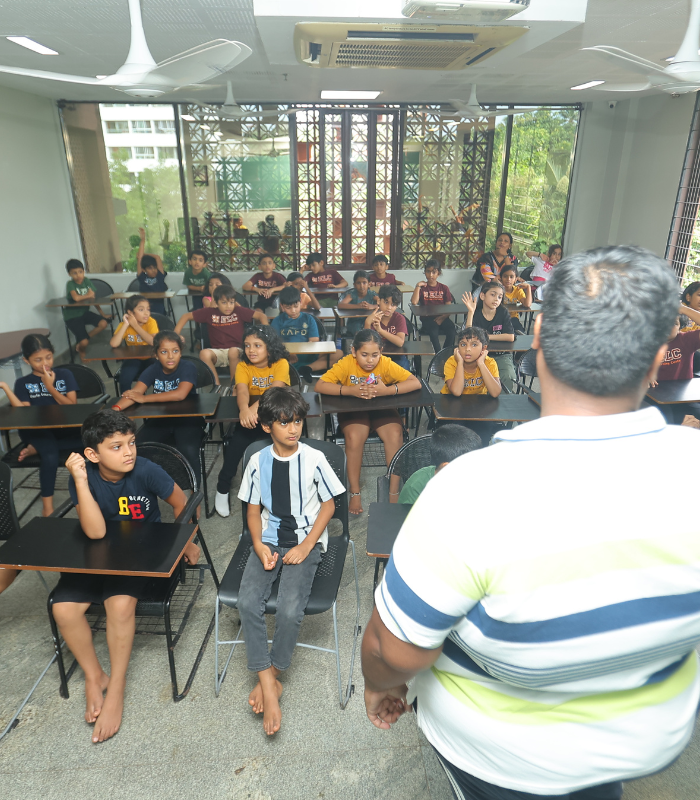
What happened when parents stepped into an ELC classroom to experience a day in the life of their child?
Where Two Frameworks Meet
Child-led, and academically rigorous.
How do Montessori’s child-led approach and Cambridge’s academic rigour co-exist inside an ELC classroom? The two blend seamlessly when we are clear on what’s most important — your child. Cambridge provides the external framework of what a child should ideally learn; Montessori provides the internal framework to help the child construct their own method of learning. The materials, the pace, and the observation-first teaching method carry the child to the same destination — with far greater ownership of the journey.
Reflections from a teacher at ELC
“Two children were independently working with a long-bead chain on the same mat — one doing linear counting, the other finding square roots. Both worked undisturbed, despite being at completely different levels.”
The Inner Life
Education and the art of learning.
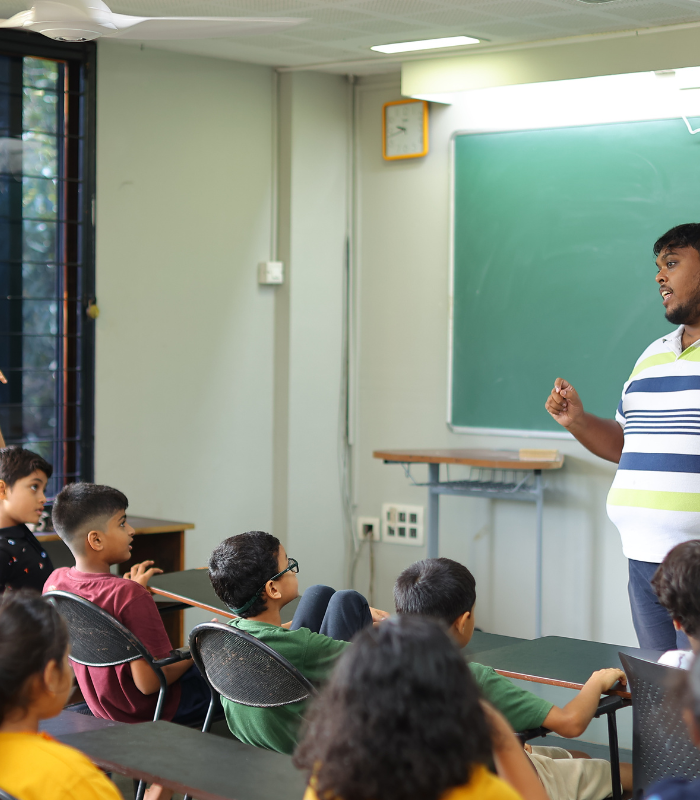
Jiddu Krishnamurti believed that the purpose of education was not merely the accumulation of knowledge, but to help them become thinkers who could investigate the world around them without bias. Thinkers who were aware of themselves and the world they live in. At ELC, his work is not a module or an elective, but a culture woven into the fabric of the school. Our teachers listen carefully to your child and recognise that their true potential cannot be reduced to results. Great results are just a by-product of the well-nourished young minds at ELC. Children are not taught what to think. They are given space to notice how they think. The result is profound thought that is the bedrock of scientific inquiry.
Reflections from a teacher at ELC
“ELC does not simply prepare a child for examinations; we work with the child to prepare themselves for the world. Instead of fearing challenges, they learn to approach them positively. Instead of competing for marks, they develop a genuine love for learning.”
Nature Perspectives
The natural world as a teacher.
Nature has a complexity that inspires curiosity, a gentleness that nurtures empathy and a magnitude that fosters humility. It is full of questions and answers to science, filled with analogues to human society and packed to the brim with wonder. Nature is one of our favourite teachers at ELC, and our homegrown Nature Perspectives, is our way of exploring the natural world through the languages of math, philosophy and science.
At ELC, we also recognize the privilege of our location. From our Mangalore campus, we are a short ride away from the magnificent Western Ghats and equally close to the wondrous coastal Karnataka. Our city and campus themselves are bustling spots of urban biodiversity. Our children regularly spend time in the living systems of forests, intertidal zones and the urban wild.
Reflections from a teacher at ELC
“Our children approach nature with curiosity and thoughtfulness. They go beyond observation, seeking to understand the relationships and patterns that shape the natural world.”

CFAL & TLC.
Students completing Grade 8 at ELC move toward CFAL (Centre for Advanced Learning) and TLC (The Learning Centre), our institutions that continue the same philosophical tradition through the secondary and senior secondary years. ELC does not simply prepare children for the next examination but creates strong roots in STEM that allows them to reach academic excellence with their curiosity for learning still intact.