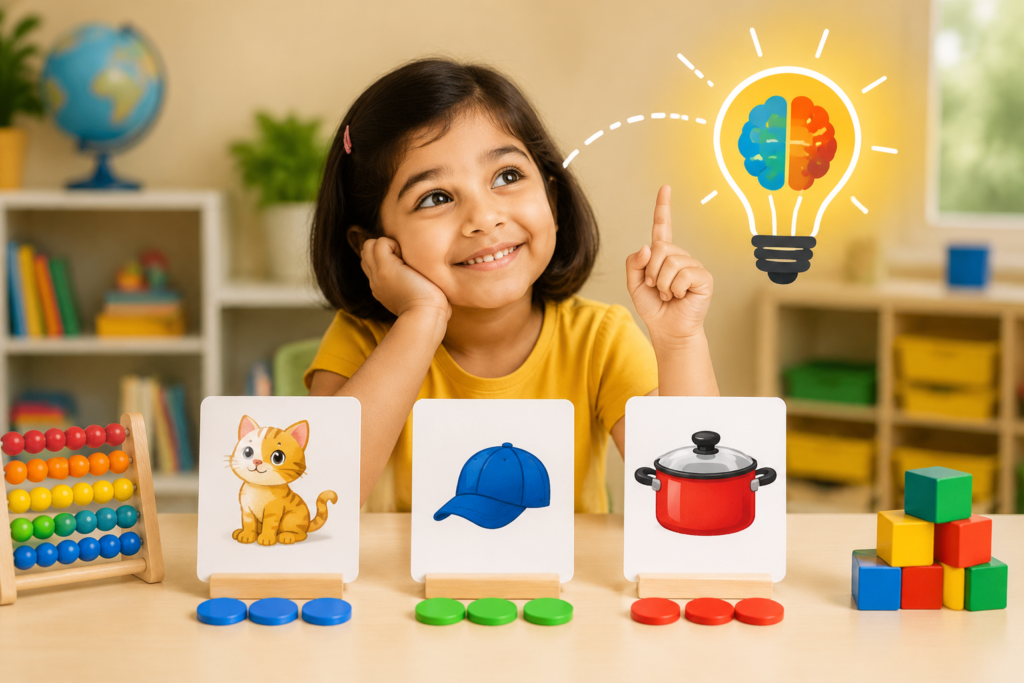
The early years of a child’s life are an important period for learning, growth, and development. Children naturally learn by observing, exploring, asking questions, and interacting with the world around them. The benefits of play-based learning in early childhood include improved communication, creativity, confidence, social skills, coordination, and problem-solving abilities.
Instead of depending only on formal classroom lessons, children can learn through games, storytelling, building, drawing, puzzles, role-play, music, and outdoor activities. These experiences make learning enjoyable while allowing children to develop important skills naturally.
What Is Play-Based Learning?
Montessori-inspired learning is based on the idea that children can learn effectively when they are given suitable materials, a supportive environment, and opportunities to explore independently. Children are encouraged to work at a comfortable pace while teachers provide direction without controlling every step of the learning process.
The classroom may include activities involving numbers, language, sorting, matching, building, art, movement, and everyday responsibilities. These experiences allow children to learn concepts through direct participation instead of simply memorizing information.
The approach also recognizes that children develop at different rates. Some may show an early interest in numbers, while others may be more interested in stories, creative activities, construction, or nature. Providing varied learning opportunities allows children to discover their strengths while developing new skills.
Encouraging Child-Led Learning
One important feature of this approach is child-led learning. Instead of expecting every child to complete the same activity in exactly the same way, teachers can provide several suitable options and allow children to make choices.
For example, one child may choose a puzzle while another works with building materials. Both activities can support concentration, coordination, problem-solving, and decision-making.
Giving children choices can also make them feel more involved in their education. When children are interested in what they are doing, they may become more willing to participate, ask questions, experiment, and try again when something does not work.
Teachers continue to play an important role by observing children’s interests and abilities and introducing activities that encourage further development.
Developing Independence Through Everyday Activities
Independence is an important part of early childhood development. Montessori-inspired learning provides opportunities for children to practise simple tasks and gradually become more confident in doing things for themselves.
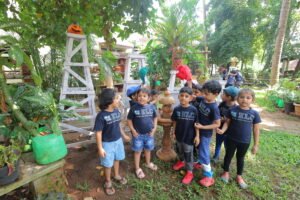
Children may be encouraged to arrange materials, put away toys, carry objects carefully, water plants, clean a small workspace, or organize classroom resources. These activities may appear simple, but they can support coordination, concentration, responsibility, and confidence.
Parents can also encourage independence at home by allowing children to complete age-appropriate tasks. Giving children enough time to try something themselves can be more beneficial than immediately doing everything for them.
The goal is not to expect young children to manage everything independently. Instead, adults provide support when required while allowing children to experience the satisfaction of completing suitable tasks on their own.
Learning Through Hands-On Experiences
Young children often understand ideas more effectively when they can physically interact with materials. Hands-on learning allows children to see, touch, move, arrange, compare, and experiment with objects.
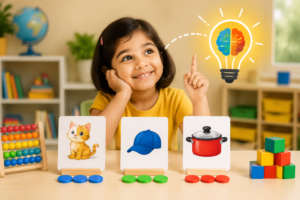
Activities can include sorting objects according to size or colour, matching pictures, counting materials, building structures, completing puzzles, transferring objects, drawing patterns, and exploring simple practical tasks.
These experiences can make abstract ideas easier to understand. For example, counting physical objects can help a child connect numbers with quantities. Building with blocks can introduce concepts related to balance, size, shape, and spatial awareness.
Hands-on activities can also support fine motor skills and hand-eye coordination. More importantly, they give children opportunities to make mistakes, adjust their approach, and discover solutions through experience.
Supporting Early Childhood Development
A strong preschool environment should support more than academic preparation. Children need opportunities to develop communication, physical coordination, social interaction, creativity, emotional awareness, and problem-solving skills.
Montessori-inspired learning can provide experiences that address several of these areas together. A group activity may encourage communication and cooperation, while an individual task can strengthen concentration and independence.
Creative activities such as painting, drawing, music, storytelling, and building allow children to express their ideas. Movement activities can support physical development, while classroom responsibilities can introduce concepts of responsibility and cooperation.
This balanced approach helps children build skills that are useful not only in school but also in everyday situations.
Learning Through Exploration and Discovery
Children are naturally curious. They often learn by asking questions, observing what happens, and trying different approaches. Learning through exploration gives children opportunities to discover concepts rather than always receiving direct answers.
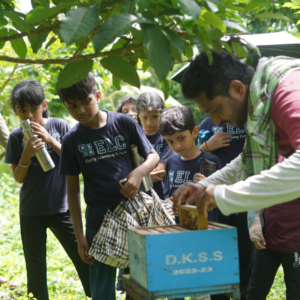
Teachers can introduce age-appropriate materials and activities and allow children time to investigate them. For example, children may explore different textures, observe plants, experiment with water, arrange objects, or investigate how different materials behave.
During these activities, teachers can ask simple questions that encourage children to think. Instead of immediately correcting a mistake, they can give children an opportunity to reconsider their approach.
This process can encourage curiosity and create a positive relationship with learning. Children begin to understand that not knowing an answer is an opportunity to investigate rather than something to fear.
Building Self-Directed Learning Skills
As children grow, they need to develop the ability to focus on tasks and make simple decisions. Self-directed learning can support these skills by giving children appropriate choices and allowing them to work at their own pace.
Children may choose an activity, gather the required materials, complete the task, and return the materials afterward. These small steps can introduce responsibility and organization.
Teachers remain available to guide children, demonstrate activities, and provide encouragement. However, they do not need to direct every action.
This balance between freedom and guidance can help children become more comfortable making decisions. Over time, children may develop stronger concentration, persistence, and confidence when approaching new activities.
Developing Practical Life Skills for Children
Preschool education can also introduce practical life skills for children. These skills involve everyday activities that help young learners understand responsibility and become more capable in familiar situations.
Examples include washing hands, organizing belongings, putting materials away, watering plants, folding simple items, carrying objects carefully, and helping maintain a classroom space.
Such activities can develop coordination while also teaching children that they have a role in their environment. Completing a small responsibility can give a child a sense of achievement.
Practical activities should always be age-appropriate and supervised when necessary. The objective is to provide meaningful opportunities for participation rather than expecting children to perform tasks beyond their abilities.
The Role of Play-Based Learning
Play is an important part of early childhood. Play-based learning allows children to develop skills while participating in activities that feel enjoyable and meaningful.
Puzzles can encourage problem-solving, building games can develop spatial understanding, pretend play can support communication and imagination, and group games can teach cooperation.
Storytelling and role-play can also help children explore emotions and social situations. Through imaginative play, children can practise communication, negotiation, decision-making, and creative thinking.
Learning does not always need to look like a formal lesson. When activities are thoughtfully planned, children can develop important skills while playing and interacting with others.
Encouraging Creativity and Curiosity
Creative expression is another important part of early childhood education. Children need opportunities to experiment with colours, sounds, movement, stories, shapes, and materials.
Art activities can encourage children to express ideas visually, while music and movement can support rhythm, coordination, and confidence. Storytelling can strengthen language skills and encourage imagination.
Montessori-inspired learning can support creativity by providing children with opportunities to explore materials and express themselves without expecting every child to produce the same result.
Allowing children to approach creative activities in their own way can help them become more comfortable sharing ideas. It can also encourage curiosity and a willingness to try unfamiliar activities.
Creating a Supportive Preschool Environment
The learning environment plays an important role in how children participate. A well-organized classroom should be safe, welcoming, accessible, and suitable for young learners.
Materials should be arranged so that children can understand where items belong and, when appropriate, reach them independently. Clear routines can help children feel secure and understand what is expected of them.
Teachers should create an atmosphere where children feel comfortable asking questions and making mistakes. Positive encouragement can help children develop confidence without creating unnecessary pressure.
Parents should also consider the relationship between teachers and children when evaluating a preschool. A caring and attentive teacher can make a significant difference to a child’s early learning experience.
Benefits for Parents to Consider
Parents looking at different preschool approaches should consider whether the environment encourages curiosity, independence, communication, creativity, and practical skills.
A suitable early learning environment should recognize that children have different interests and developmental needs. It should provide enough structure to create security while also offering opportunities for exploration and choice.
Parents can ask schools about classroom activities, teacher-child interaction, learning materials, daily routines, outdoor opportunities, and how children’s individual needs are supported.
The right environment is not simply about choosing a particular teaching label. It is about finding a place where children feel safe, respected, encouraged, and interested in learning.
Conclusion
Montessori-inspired learning creates opportunities for children to explore, make choices, develop independence, and learn through meaningful experiences. It moves beyond memorizing information by giving children opportunities to participate actively in their learning.
Through child-led activities, hands-on experiences, practical responsibilities, creative expression, and exploration, children can gradually develop confidence and important everyday skills.
For parents, understanding this approach can make it easier to evaluate preschool environments and identify one that supports their child’s individual development. A nurturing early learning experience can give children a strong foundation for curiosity, independence, creativity, and lifelong learning.
How to Choose the Right Preschool in Mangalore for Your Child
The ultimate goal of preschool should not simply be to prepare children for worksheets, tests, or academic performance.
Early education should help children become curious, confident, independent, and excited to discover new things.
A strong preschool experience gives children opportunities to ask questions, solve simple problems, express themselves, interact with others, and enjoy learning through everyday experiences.
Making the Right Choice for Your Child
Knowing how to choose the right preschool in Mangalore becomes easier when parents focus on what truly matters for their child’s early development. A safe environment, caring teachers, appropriate teaching methods, meaningful activities, communication with parents, and opportunities for play and exploration are all important factors.
Take time to visit different schools, ask questions, observe the environment, and understand each school’s approach to early childhood education. Most importantly, consider where your child is likely to feel safe, supported, happy, and encouraged to learn.
UNICEF also highlights that play supports children’s social, emotional, cognitive, and physical development.
The right preschool can give your child a strong foundation for future learning while making their first educational experience enjoyable and memorable.